
SOLD OUT
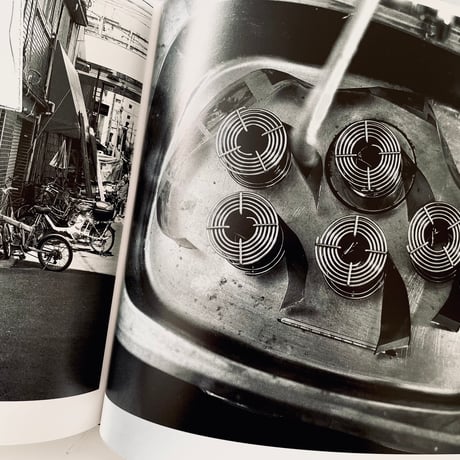
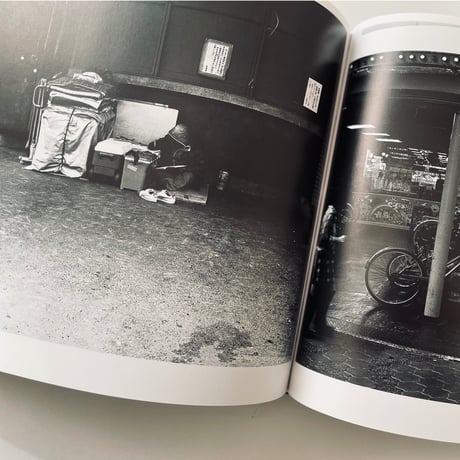
"MOSQUITO PAPER"
Images 2016-2019
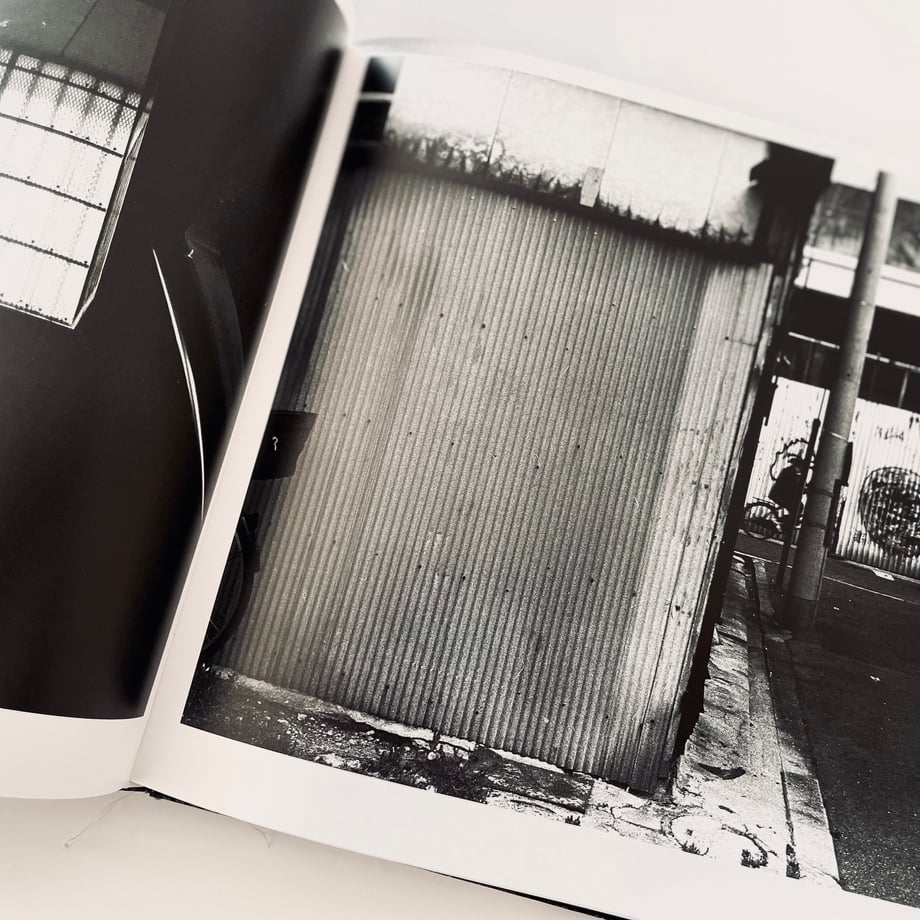
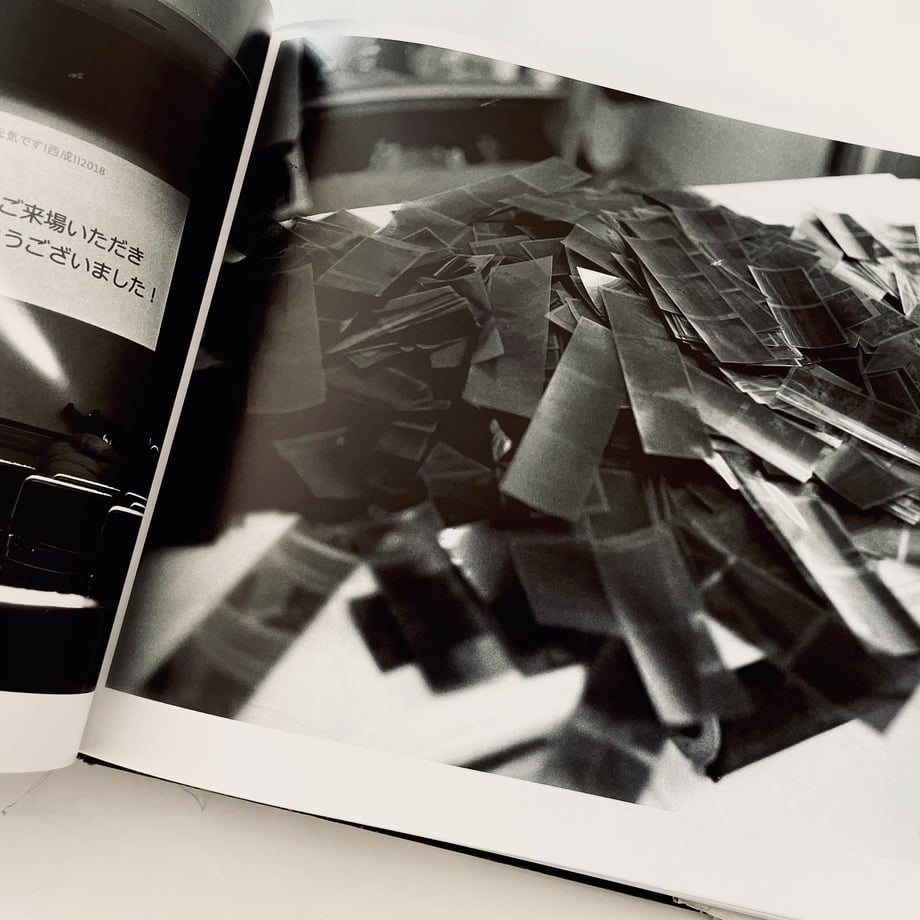
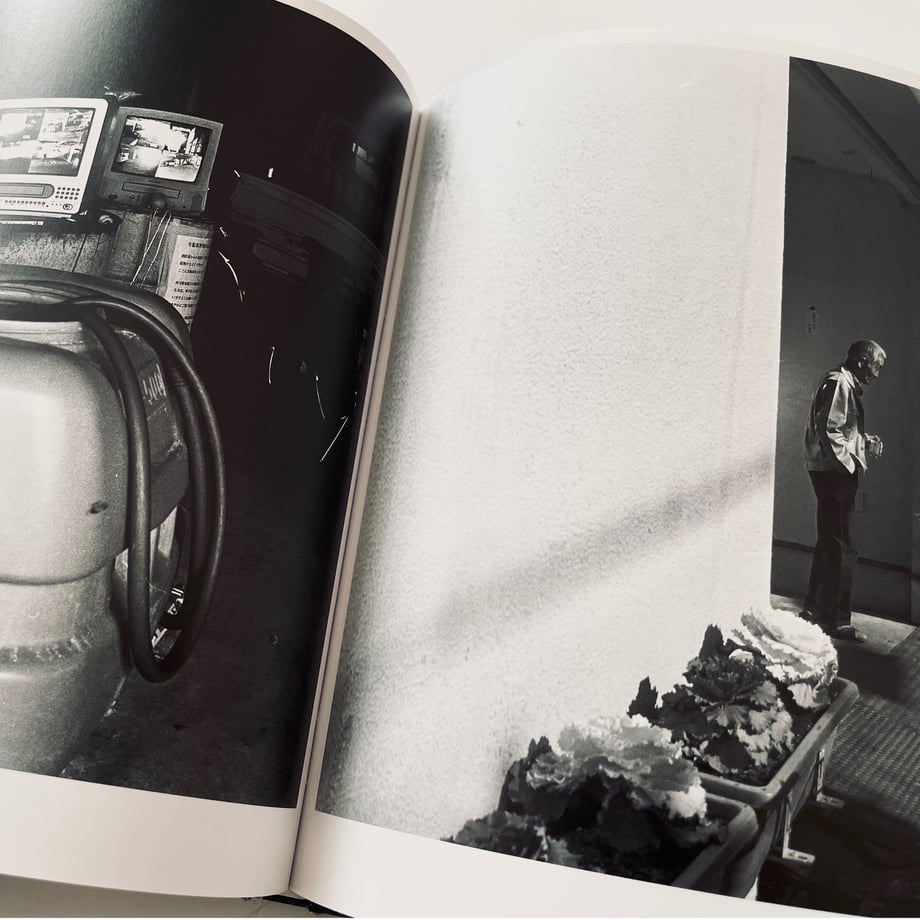
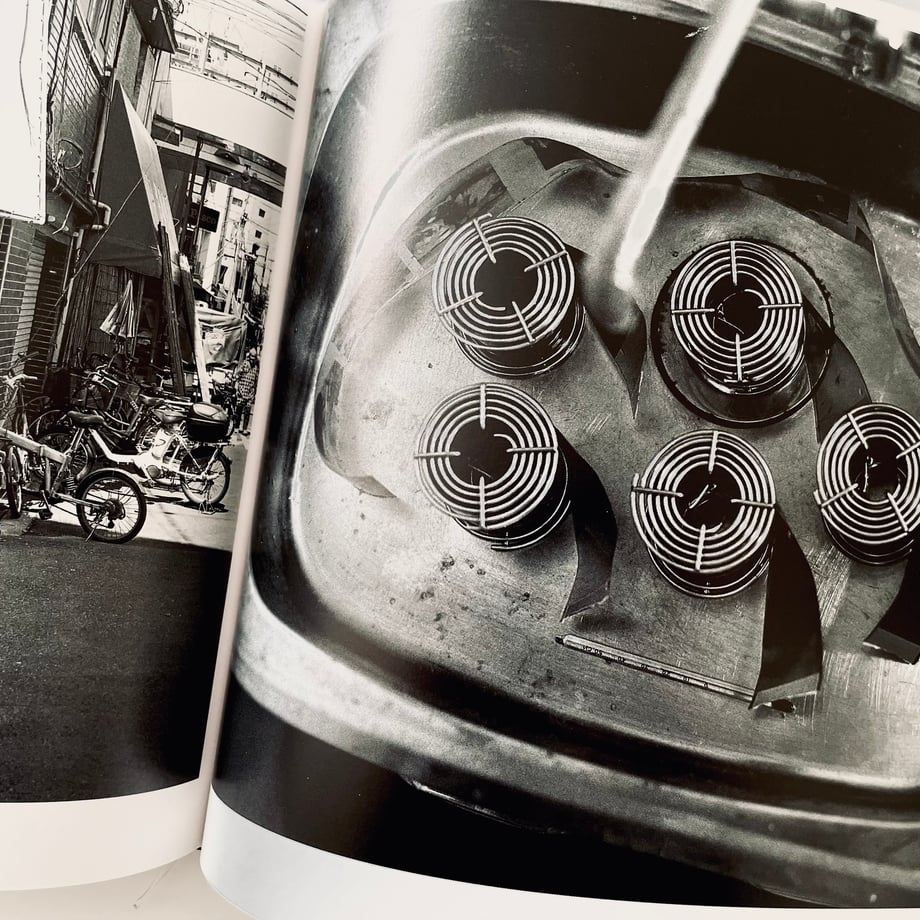
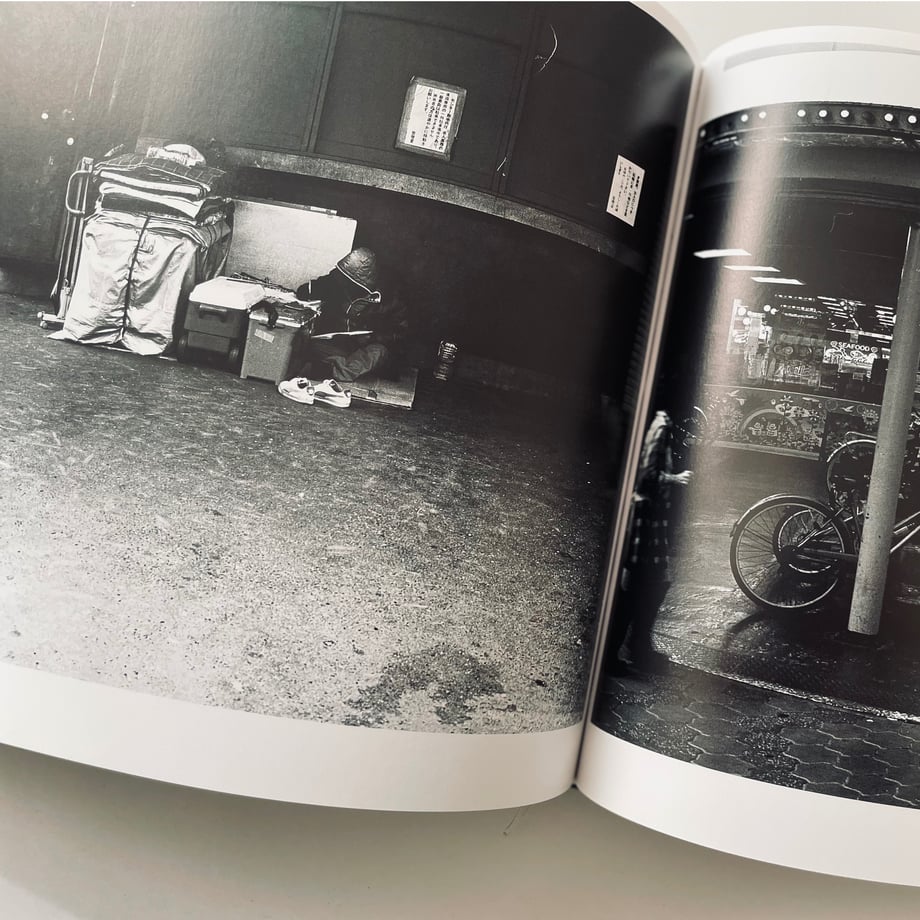
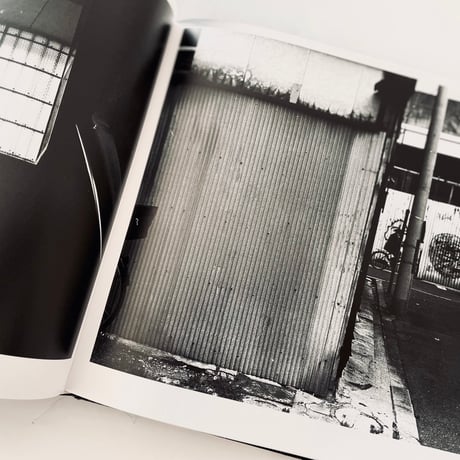
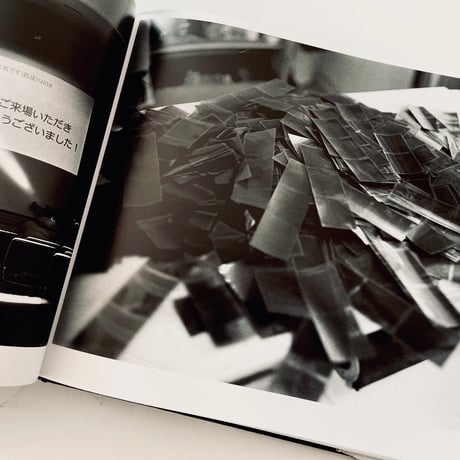
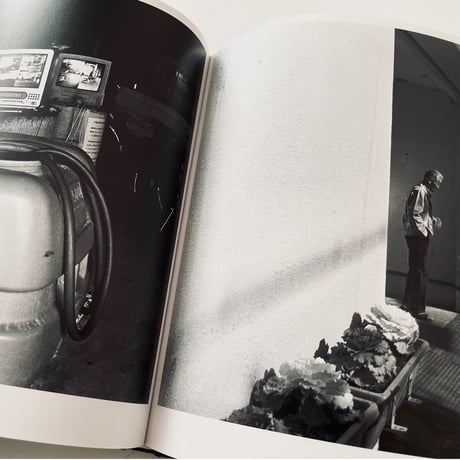
SanSanStudio/W265×H225mm/Hard Cover/152pages/B&W 142images/ ISBN978-4-908725-06-7/Edition of 100
※Produced in 2023 / Edition 1 (Cover of
Collage)
サインをご希望の方は、備考欄にご記入ください。
「眼を動かす動作と一緒に浮かび、壁を見ている時や空や天井を見上げた時にも自覚する。昭和五十年代、地元広島の流川界隈で幼少期を過ごした、あの頃からどこへ行っても視線を動かすと、蚊みたいな糸くずみたいな形が視界内で追いかけてきた。
往時、流川界隈の薬研堀通り沿いに在ったキャバレー『ロンドン』の正面から向かって右に精肉店、生花店、文房具店、飲食店…と立ち並ぶ一角の生花店の上で小学三年生まで家族と暮らしていた。今も辛うじて残る流川通り沿いの生花店が嘗ての祖父母宅で、隣筋、薬研堀通りの実家跡ともども現在は飲食店や風俗店の無料案内所に代変わりした。しばらくはこの周辺にあったいくつかの見慣れた建物も、いつの間にか沢山のコインパーキングやコンビニになっている。馴染みの銭湯『あずま温泉』はもうだいぶ前にクラブ(踊るほう)に様変わりした。
振り返って思えば、朝玄関のシャッターを開けると目の前で横たわるおじさん、ふらつく酔っぱらい、道端の嘔吐物を避けながら登校する通学路、ゴミ収集車の清掃員の作業服、下校途中に寄り道しながら迷い込む謎のトイレ、夕方ひとりで行く『あずま温泉』の湯船の中から眺めた大人の姿、水前寺清子のポスターと広島カープのカレンダー、スタンドから漏れるカラオケの騒音、キャバレー『ロンドン』の呼び込みと客のせめぎ合い、その隣『エモリ化粧品店』のバックヤード、裏にはトルコ街の派手な看板と暗い路地、赤レンガの『新天地公園』はブルーシート・ダンボールハウス、コンビ二『ポプラ』の長老(ホームレス)、万引きしたスーパー『イズミ』のビ二―ル袋、中学生に恐喝された雑居ビル、怖いものに引き寄せられ、それがおもしろさへと転じた、相反する感情、一生懸命走って夢中で遊んだ遠い記憶、その時見ていた光景はいまだ自分の中におぼろげに貼り付いる。
それらは、現在暮らす大阪の街をふらっと歩きながら写す時、そこで何かを見た拍子にゆっくりと反応し始め、記憶に繋がっていくような、そんな、当時経験した地元の感覚や、すっかり忘れてしまった夢みたいな一瞬、すでに記憶からすっ飛んでしまっているディテイルが蘇ってくるような感じがする。もちろんそれは、自分が生まれた広島の流川界隈の規模から何からまるで違う、むしろ似ても似つかわない程の雰囲気だけど、自分の記憶の中だけの相似が、これからも歩く写真の撮影地としては、何か打ってつけで必要なひとつの場所になった。
大阪・西成の旅もすっかり日常になって四年が経つ。毎日路上で何気なく出会う質感や匂い、重さみたいな何かが、日々の中の感覚的な断片や糸口のようなものと混ざって、好き嫌いを超えたところで、簡単に素通りできない光景や、感情と矛盾するような行為へと駆り立てられるのは、往時の空気感や匂い、たたずまいが無意識(意識的)に蘇って、勝手に置き換え、重ねて見たい欲望が、僕にとっての写真なのかもしれない、と時々こんなことを思う。そして突然何かを落としたような気持になり、どこかでいつの間にか変化していったことを意識する。その地点を確認するためにもう一度スタート付近に戻ろうとするが、二度と引き換えせないことに気づく。
気にしなければ気にならないし、気になりだすと気が気でない、細くうごめく点のような先、奇妙でせわしなく動く蚊の足みたいな薄い影は、今も僕の眼の中で動き回っている。」(「あとがき」より)
"It appears whenever I move my eyes, and I become aware of it when I look at a wall or the sky or ceiling. I spent my childhood in the 1970s in my hometown of Nagarekawa in Hiroshima, and ever since then, whenever I moved my eyes, a mosquito-like, lint-like shape would follow me across my field of vision.
Until I was in the third grade of elementary school, I lived with my family above a flower shop on a corner of a street lined with butchers, florists, stationery stores, and restaurants, all facing the cabaret "London" on Yagenbori Street in the Nagarekawa area. The flower shop along Yagenbori Street, which still barely remains, was once my grandparents' home, and along with the remains of my parents' house on the neighboring street, Yagenbori Street, it has now been converted into a free information center for restaurants and adult entertainment establishments. Several familiar buildings that once stood in the area have now been replaced by numerous coin-operated parking lots and convenience stores. My favorite public bath, "Azuma Onsen," was transformed into a club (the dancing kind) quite some time ago.
Looking back, I remember opening the shutters of my front door in the morning to find an old man lying down in front of me, a staggering drunk, dodging vomit on the roadside on my way to school, the work clothes of the garbage truck cleaners, the mysterious toilet I wandered into while taking a detour on my way home from school, the adult figures I saw from the bathtub at Azuma Onsen when I went alone in the evening, the poster of Kiyoko Suizenji and the Hiroshima Carp calendar, the noise of karaoke leaking from the stands, the struggle between the barkers and customers at the cabaret London, and the people next door. The backyard of Emori Cosmetics Store, the gaudy signs and dark alleys of Turkey Town behind it, the blue tarp and cardboard houses in the red brick Shintenchi Park, the (homeless) elder of the Poplar convenience store, the plastic bags I shoplifted from the Izumi supermarket, the multi-tenant building where I was blackmailed by a junior high school student, the conflicting emotions of being drawn to scary things that then turned to fun, the distant memories of running as fast as I could and playing enthusiastically - the scenes I saw at that time are still vaguely stuck in my mind.
When I photograph these things while casually walking around the streets of Osaka where I live now, it's as if I slowly react to something I see and it connects to my memory, bringing back to me the local sensibilities I experienced at the time, a dreamlike moment I've completely forgotten, and details that have already disappeared from my memory. Of course, the area is completely different in scale from the Nagarekawa neighborhood in Hiroshima where I was born; in fact, the atmosphere is completely dissimilar. But this similarity, existing only in my memory, has somehow become a perfect and necessary location for my walking photographs.
Four years have passed since traveling to Nishinari, Osaka, became a part of my daily routine. The textures, smells, and weights I encounter casually on the streets every day mix with the sensory fragments and clues of everyday life, transcending likes and dislikes, creating scenes that I can't easily pass by, and driving me to actions that contradict my emotions. I sometimes think that the atmosphere, smells, and appearance of the past are unconsciously (or consciously) revived, and the desire to arbitrarily replace and overlay them is what makes a photograph for me. Then, suddenly, I feel as if I've dropped something, and I become aware that something has changed without me realizing it. I try to return to the starting point to confirm that point, but I realize that it can never be redeemed.
If I don't pay attention to it, it doesn't bother me, but once I do, it becomes unsettling. The thin, wriggling dot-like tip, the faint shadow that moves strangely and restlessly like a mosquito's leg, is still moving around in front of my eyes." (From "Afterword")
Other Items
-
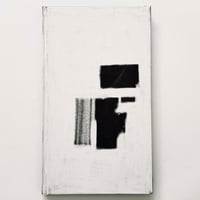
- 森川健人『CISCO』Limited edition of 20(Tenderloin Cuts)7/10
- 5,000 JPY
-
- 森川健人『GOOD LUCK BEETLE』Limited edition of 1(GOOD BEY BEETLE)Part2
- 13,000 JPY
-
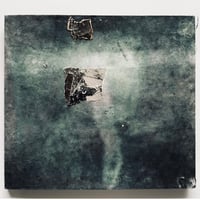
- 森川健人『GOOD LUCK BEETLE』the versions#8
- 13,000 JPY
-
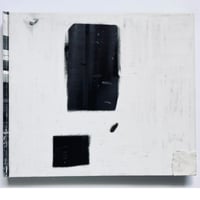
- 森川健人『MOSQUITO PAPER』Limited edition of 10(Story of Mosquito)1/10
- 6,000 JPY
-
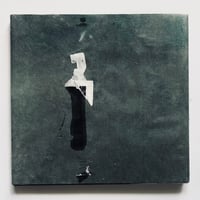
- 森川健人『MILD NINE SHANGHAI LU』the version #3
- 3,000 JPY
-
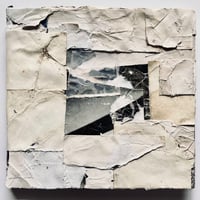
- 森川健人『MEXICO CITY LIGHTS』Limited edition of 1(Mexico Version)PART6
- 12,000 JPY